Young researchers discover BPRC during Weekend of Science
Young researchers aged 8 to 18 discover BPRC during Weekend of Science, exploring research, animal care and science through hands-on activities.
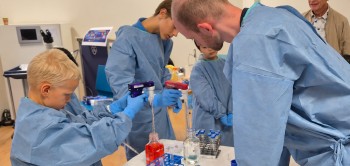
Wide-eyed, the first children arrive at the site. It is a place they would not normally get the chance to visit. During Weekend of Science, BPRC opened its doors to young researchers aged 8 to 18. It was a day for looking and listening, but above all for getting hands-on.
After a short introduction by director Merel Langelaar, the groups set off. From the laboratory and imaging facilities to the veterinarians and monkey enclosures, the tour gives visitors the opportunity to discover different aspects of the research carried out at BPRC.
Several media outlets also came along to take a look. Dutch newspaper AD joined the open day and covered the visit both online and in its national newspaper. InRijswijk also produced a report about the day, while Feel Good Radio Rijswijk was there too. This meant that not only the visitors on site, but also people outside BPRC could get a glimpse of what there was to discover during Weekend of Science.
Getting hands-on in the lab
“Putting on a lab coat is actually quite difficult,” one of the children remarks. Once properly dressed, the young researchers get to work themselves. They learn how to pipette, examine material under a microscope and see a piece of DNA made visible by our researchers.
There is plenty to discover in imaging too. The children learn how researchers use PET-CT scans to image the brain, examine X-rays and even use a special device to watch blood cells moving through the tiny blood vessels in their own hands. “That was my favourite part,” one of the girls says afterwards.
How do you take good care of monkeys?
Research at BPRC also means taking good care of the animals. “We think it is incredibly important to take good care of our animals. That is something you will discover today as well,” Merel Langelaar explains during her introduction.
With the veterinarians, the children discover what this involves. They learn that the monkeys receive a dental check-up every year and take a closer look at the instruments used for this. One large canine tooth attracts particular attention. “That is really big.”
The children then get to experience what it is like to be a veterinarian themselves. They practise giving an injection on a piece of artificial skin. For some, it is a little nerve-racking, but no one has to take part and almost everyone decides to give it a try.
Of course, the tour also takes the visitors to see the monkeys. The colony manager explains how the animals are cared for, the role enrichment plays in their lives and how monkeys live together in social groups. The children are curious and ask plenty of questions.
After several hours filled with new experiences, the children and their accompanying adults leave the site again. “This was amazing,” one parent says as they leave. “Completely different from what I expected.”