'If you forget something, you have to start all over again'

Often working behind a glass safety cabinet, with her hands in gloves through openings in the screen and wearing protective clothing, Daniëlla has spent 25 years working as an analyst on research into viruses ranging from HIV and influenza to COVID. Highly focused, well prepared, and everything according to protocol. “Everyone who works in the lab has to know exactly what they are doing.”
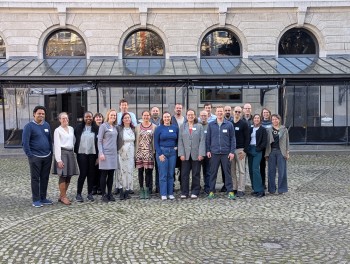
Analysts form a crucial link in the research into life-threatening infections and complex brain diseases that we carry out at BPRC. For us, this is a reason to put Daniëlla and her 25 fellow analysts in the spotlight during Analyst Day.
As a child, she wanted to become a veterinarian. But when she discovered how much studying that required, she chose a different path: laboratory school. Through internships and her first job in diagnostics, she eventually ended up at BPRC. “In my previous work it was mostly the same thing over and over: running diagnostics and passing on results. I preferred to do something where you also have to think for yourself and figure things out.”
A quarter of a century
She found that at BPRC. By now she has been working in the virology department for a quarter of a century. “During my training, working at an organization that also does research with laboratory animals seemed quite difficult. I felt sorry for them,” she says. “I wondered how I would feel about that emotionally. Until I saw how carefully everything is done. And yes, you kind of grow into it. I did not even know this kind of work existed before,” she says with a laugh. “But now I would not want to do anything else.”
During the coronavirus pandemic, her work changed drastically. Where the lab normally has a fixed rhythm, suddenly there was much more work. “All kinds of people from other departments came to help us out.”
Especially during the COVID period, it became even more clear that the work of an analyst is about accuracy, but certainly not only about following protocols.
“That puzzle-solving is part of it too”
Daniëlla works with blood and cell material to investigate, for example, whether a vaccine works or how the immune system responds to a virus. “You follow protocols, but you also have to understand what you are doing. Sometimes something does not work as expected. Then you have to think for yourself: what is causing that?”
She compares it to cooking: “You have a recipe, but sometimes that recipe is not quite right. Then you have to adjust it. That puzzle-solving is part of it too.”
Working there requires full focus and good preparation. Just entering and leaving the lab takes time. “You have your hands in a cabinet, wearing protective clothing and a face mask. You can easily spend a few minutes disinfecting before you are allowed to leave. So you quickly learn: prepare well. You cannot just grab something or step out for a moment. And if you forget something, you have to start all over again.”
Some procedures are deliberately done with two people. “For important steps, such as preparing virus material, you work together. You check each other.”
More than just lab work
What often remains invisible is that the work of an analyst goes far beyond just carrying out experiments. Daniëlla provides training, keeps processes organized, and thinks along about how things can be done more efficiently. “You are also involved in organizing: what do you need, how do you prevent waste, how do you set up a lab efficiently.”
In recent times, she has worked on reducing the number of freezers and refrigerators in the labs.
“You notice that over the years a lot is kept. But you also have to make choices. That is sometimes difficult, but necessary.”
In addition, she plays a role in refining, replacing, and reducing the experiments with monkeys conducted at BPRC. For example, by looking for alternatives to substances that traditionally come from animals.
A crucial link
In short, analysts form a crucial link in BPRC’s research. Without their work, there are no reliable research results. Still, Daniëlla sees her role in a down-to-earth way: “Everyone here contributes. Whether you work in the lab, do research, or something else. We all need each other.”
And yet she continues to go to work with pleasure every day. “No day is the same. You are busy with experiments, with people, with solving practical problems. That combination makes it fun.” So one more time the question: would she make the same choice again as a teenager? “Yes,” she says without a trace of doubt. “I would choose this profession again.”